Storm-Ready Gardens: Dealing with Overgrown or Unsafe Trees Before Winter in Hampshire
EH Landscaping Team • 3 October 2026
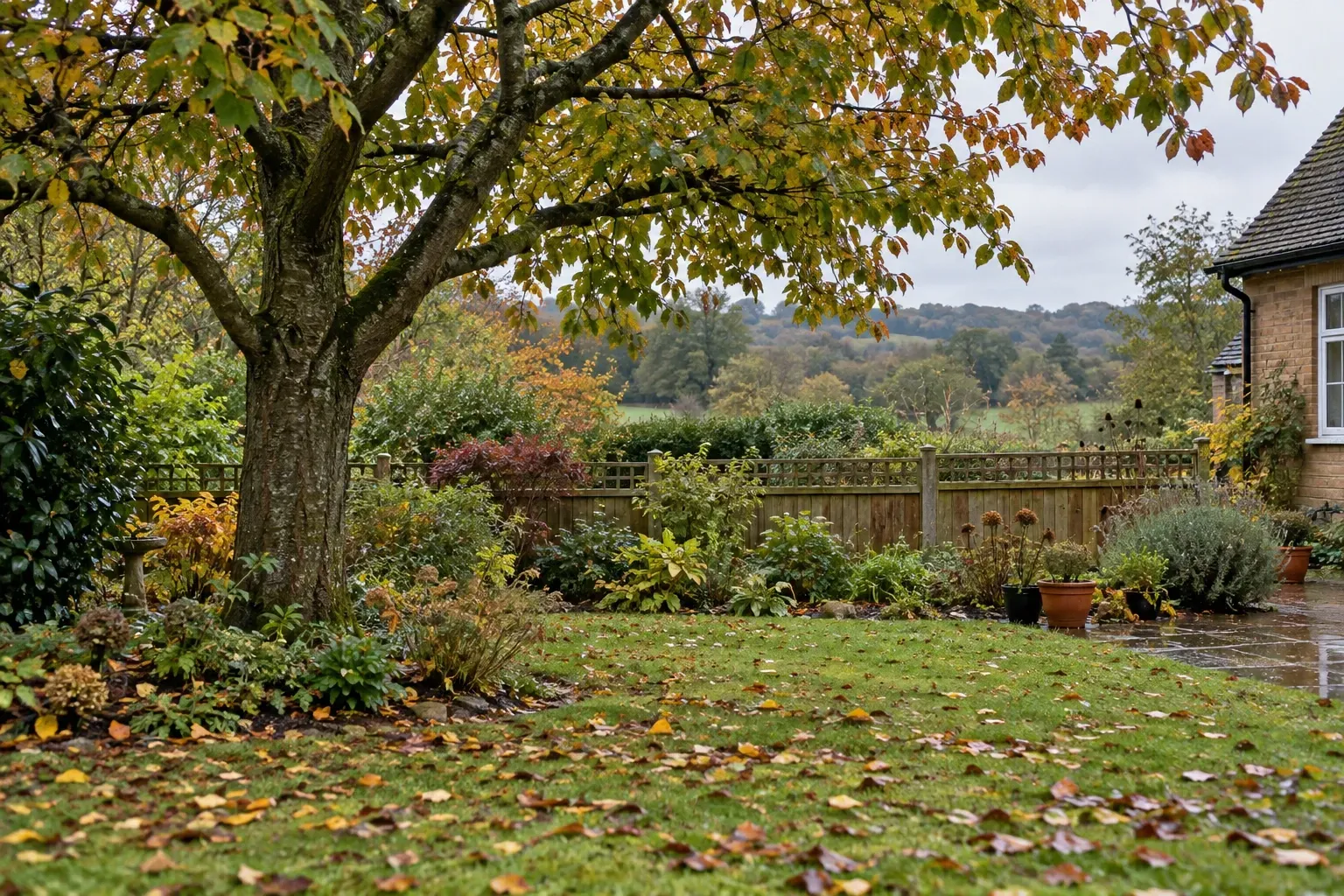
Mature deciduous tree, timber fence and damp lawn in an autumn Hampshire-style garden

Autumn is the time to tackle the jobs that could become problems in winter wind: unsafe trees, weak fences, overgrown hedges, tired lawns and loose items. If you are worried about storm damage to trees in Hampshire, check early so there is time to establish whether permission is needed. Based in Swanmore, our fully insured, five-star rated team has over 10 years’ experience around Bishop’s Waltham and the Meon Valley. If a tree has a new lean or split limb, ask us to take a look.

When to do the work

The main bird breeding period is generally March to August, so autumn often suits hedge work. Active nests remain protected whenever in use or being built, so check before cutting. Winter dormancy suits pruning many deciduous trees, depending on species and purpose. Deal with immediate hazards promptly.


Work through the garden in this order:

1.      Check trees and any legal protections.

2.      Test fence posts and repair weak sections.

3.      Trim suitable hedges after checking for nests.

4.      Repair the lawn while conditions favour recovery.

5.      Clear leaves, drains and loose items.

6.      Plan larger landscaping work for spring.


You can make these checks from the ground. Leave climbing, chainsaws and heavy limbs, especially near buildings or cables, to a professional.

Check trees before the wind does

A large oak or ash in Wickham or Corhampton does not need removing simply because it is tall or near a house. Look for changes and what a falling branch could hit.

Warning signs to look for

·        A new lean with lifting or cracked soil around the roots.

·        A split stem, major crack or branch caught high in the crown.

·        Large dead branches over a path, drive, building or neighbouring garden.

·        Fungal brackets or obvious decay at the trunk base.

·        Broken limbs or a changed lean after a storm.

These signs call for assessment, not automatic felling. Ash dieback can cause branch dieback, but a sparse crown alone is not a diagnosis. Stay clear of hanging branches.

Pruning, damage and emergencies

A specified crown reduction can shorten heavy branches; deadwooding removes dead branches. Crown thinning is not a routine fix for wind risk, and topping can leave weak regrowth. An assessment determines whether pruning or removal is needed. Our tree surgery service covers both. No pruning makes a tree storm-proof.


If a tree has fallen or a limb is hanging, keep people away and do not cut wood under tension. Stay clear of cables and damaged buildings. Call 999 for immediate danger to life or 105 for an electricity network emergency. Otherwise, photograph damage safely, contact your insurer if property is affected, and arrange professional clearance. Urgent callouts depend on conditions and availability.

Check permission before tree work

A Tree Preservation Order (TPO) normally requires written council consent. Many other conservation-area trees need six weeks’ Section 211 notice; trunks 75 mm or less in diameter at 1.5 metres above ground are commonly exempt from that notice. Owners and contractors both have responsibilities. Do not assume a dead or dangerous tree is exempt: ask the council if time allows and keep evidence. See GOV.UK’s protected-tree guidance. Swanmore and Bishop’s Waltham are in Winchester district; check the council for other addresses. Private-garden trees generally do not need a felling licence, but other protections still apply.

Check the fence posts, not just the panels
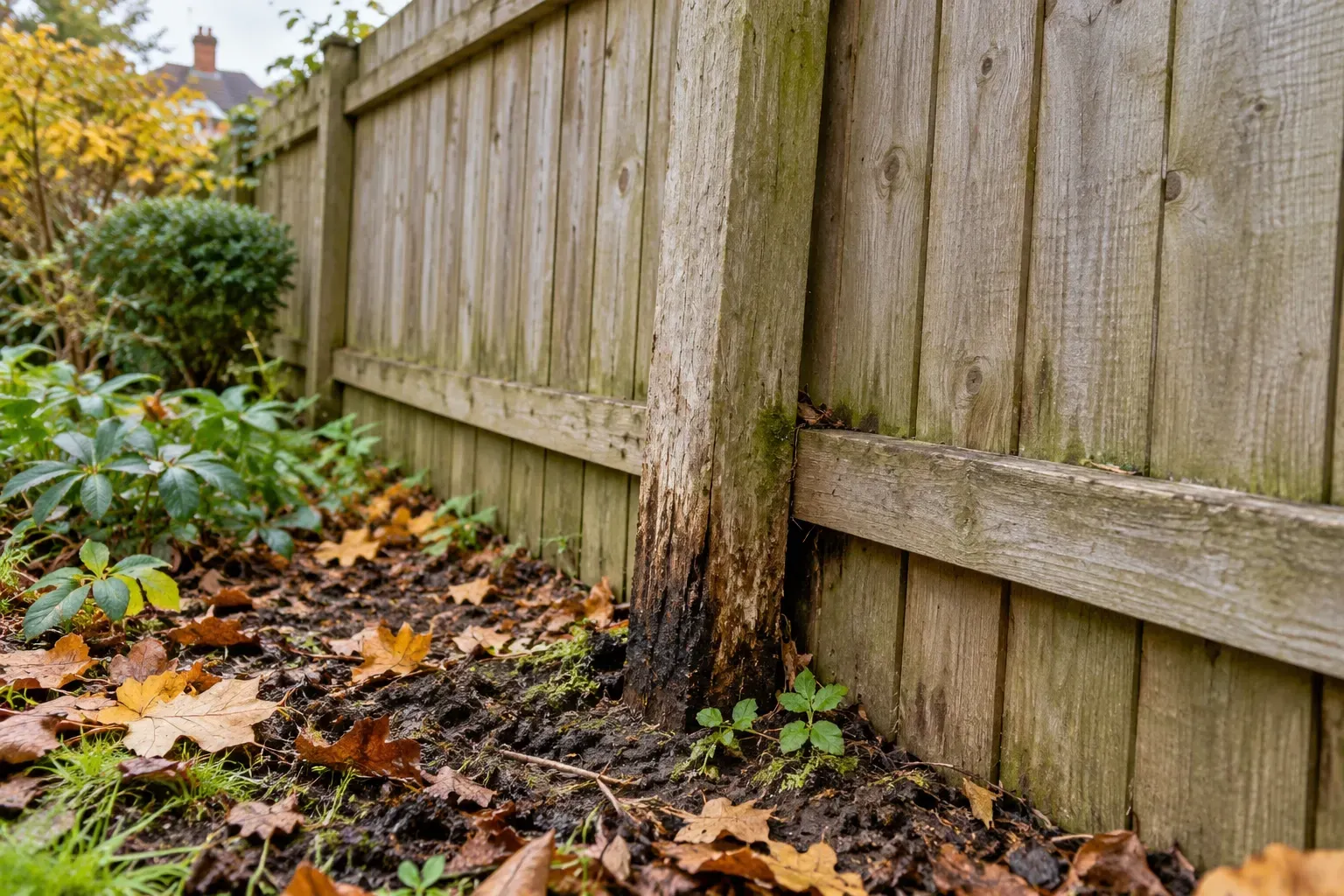
Weathered timber fence post with darkened wood at soil level in an autumn garden

On a calm day, gently test posts for movement and look for rot at ground level, loose fixings and damaged panels. Do not push an unstable fence. Sound posts may need only new panels; several moving posts may call for a larger repair or new run. Timber or concrete posts, gravel boards and repair spurs are options. Replace a small panel yourself if safe; leave unstable or tall sections to a professional.

If a storm blows my fence down, who pays?

Responsibility is not decided by which side the posts face. Check deeds and boundary agreements; “T” marks help only when the wording supports them. See HM Land Registry’s boundary guidance. Most standard buildings policies exclude wind damage to fences and gates, but check yours. A neighbour is not automatically liable if their tree falls; a known, foreseeable problem may change matters. Photograph the damage and speak to your neighbour and insurer. Our fencing service can assess repair or replacement once responsibility is clear.

Trim hedges with care

Autumn often suits an overgrown hedge, but check for active nests and leave occupied sections alone. Avoid severe cuts that hinder recovery. You can trim an accessible hedge from safe footing; tall leylandii, dense laurel or a roadside hedge needs more planning. EH’s site shows work in Hedge End and Bishop’s Waltham, and our hedge cutting service covers larger jobs.

Repair the lawn while the soil is still workable

Clear leaves, then check why the lawn is patchy. Scarifying, aeration and overseeding may revive sound turf; bare areas may need new turf. Fix drainage or compaction first. Mild, moist early autumn suits many lawn jobs if the ground is not frozen or saturated. Small repairs are manageable yourself; larger jobs need ground preparation and aftercare. See our turfing service.

Clear up and plan ahead

Clear leaves from paths and lawns, check drains and gutters, and secure loose pots and furniture. Lift only branches you can handle safely; never pull down one caught in a tree. Compost suitable material or use council green-waste collection. For larger jobs, confirm waste removal in the quote: EH clears cuttings where included and leaves the working area tidy.


Winter gives you time to plan drainage, a patio or a wider garden change for spring. Tree surgery and landscaping can affect each other, such as when shade shapes lawn plans. Explore our landscaping services across Hampshire.

Get your garden ready before the weather turns

For help with a tree, fence, hedge or lawn, we can look at the jobs together and give you a clear quote. EH Landscaping & Tree Services works around Swanmore, Bishop’s Waltham, Waltham Chase, Wickham, Botley, Corhampton and the wider Meon Valley, with enquiries from nearby Hedge End and Eastleigh welcome. Call 07490 465185 or use our contact form for a free, no-obligation quote.

Hampshire garden-prep FAQs

  • If my fence blows down, who pays?

    Check your deeds and boundary agreement, then your insurance policy. Responsibility and cover depend on the facts; fence position alone does not decide.

  • Do I need permission to prune or remove a tree?

    TPO work normally needs council consent. Many conservation-area trees need six weeks’ notice. Check with the local planning authority before work.

  • What if a tree comes down in a storm?

    Keep clear of hanging wood and cables. Call 999 for danger to life or 105 for an electricity network emergency; arrange safe clearance.

  • Does insurance cover trees and fences?

    Cover depends on the policy and what was damaged. Standard buildings policies often exclude wind damage to fences and gates. Ask your insurer.

  • Can I repair a lawn in autumn?

    Yes, if the soil is workable. Reseed, repair or lay turf in mild, moist conditions, and address drainage problems first.
by EH Landscaping & Tree Services • 23 July 2026
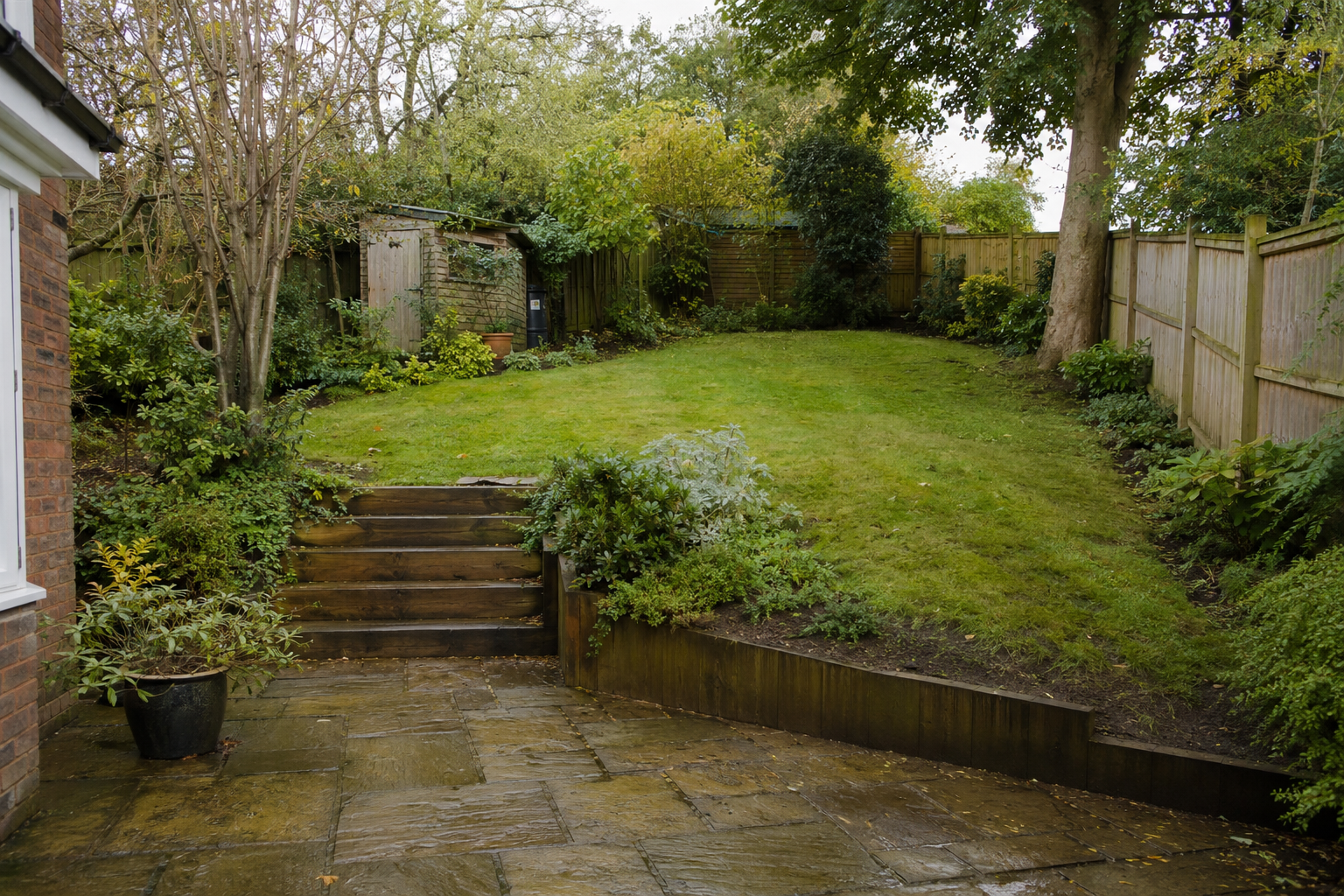
Garden Ideas for Making the Most of an Awkward or Uneven Garden An awkwardly shaped or uneven garden can feel difficult to work with. Sloping ground, narrow sections, changes in level and established trees can all make it harder to picture how the finished garden could look. However, these features don’t necessarily need to be removed or hidden. With a considered layout, they can often become some of the most interesting parts of the garden. Here are some practical garden ideas for making better use of an outdoor space that currently feels awkward, uneven or difficult to maintain. Start with How You Want to Use the Garden Before deciding where to put a patio, lawn or planting bed, think about what you actually want from the space. You might want somewhere for outdoor dining, a safe area for children, easier access to the bottom of the garden or simply something that requires less maintenance. Most gardens need to serve more than one purpose, but trying to fit everything everywhere usually results in a cluttered layout. Deciding what matters most will help determine which parts of the garden should be level, where paths are needed and which existing features are worth keeping. Use Different Levels to Create Separate Areas It can be tempting to flatten a sloping garden completely, but that isn’t always necessary—or the best use of the available space. Creating a series of defined levels can make the garden more practical while retaining some of its natural character. One level might become a paved seating area, another a lawn, and a third a planted section. Steps, retaining walls, raised beds and carefully positioned pathways can connect these areas and make the changes in height feel intentional. Breaking the garden into zones can also make a long or unusually shaped plot feel more balanced. A professional team providing garden landscaping in Bishops Waltham can assess the existing levels and help establish which parts of the garden genuinely need changing. Give the Patio a Clear Purpose A patio doesn’t automatically need to sit directly outside the back door. Depending on the shape of the garden and where it receives sunlight, another position might work better. A raised patio can provide a useful level area in a sloping garden, while a smaller paved section further down the garden can create a separate place to sit during a different part of the day. Think about how much furniture the area needs to accommodate and leave enough room to move around it comfortably. A slightly smaller patio with sensible proportions will usually work better than a large area of paving squeezed into the wrong position. Make Paths Part of the Design Paths are particularly important in uneven gardens. They provide safe, practical access, but they can also help guide the eye through the space. Rather than forcing a perfectly straight path into an awkward garden, it may make more sense to follow its shape. Gentle changes in direction can connect different areas naturally and create space for planting alongside. Materials should suit both the property and the way the path will be used. Gravel can work well in informal areas, while paving may be more appropriate for frequently used routes or places that need to remain accessible throughout the year. Choose the Right Type of Lawn A lawn can soften a garden and provide useful open space, but uneven or poorly prepared ground will make it difficult to maintain. Before laying new turf, the ground needs to be properly cleared, levelled and prepared. Drainage and soil condition may also need attention, particularly where water currently collects. For some gardens, one well-positioned area of lawn is more practical than trying to lay grass across every change in level. Professional turfing can provide a much cleaner finish when the existing ground is uneven or in poor condition. Use Fencing to Improve the Shape of the Space Fencing is usually treated as a boundary, but it has a significant effect on how a garden looks and feels. Replacing damaged or mismatched panels can immediately make the entire space appear more finished. In narrow gardens, consistent fencing helps reduce visual clutter, while horizontal styles can make the plot feel wider. Fencing can also be used within the garden to screen bins, storage areas or working sections without hiding the whole space. If privacy is the main concern, consider how the height and position of the fence will interact with nearby trees and planting. Properly installed garden fencing will provide privacy and structure without making the garden feel unnecessarily enclosed. Work with Established Trees Where Possible Mature trees can complicate a garden redesign, but they may also provide shade, privacy and a strong focal point. Before deciding to remove one, consider whether careful pruning or crown reduction could make it work better within the new layout. Opening the canopy may allow more light into the garden while retaining the tree’s character. Tree roots also need to be considered when planning patios, retaining walls and other hard landscaping. If a tree is unsafe, unsuitable for its position or affecting the use of the garden, seek advice from a professional offering tree surgery services . Use Planting to Soften Changes in Level Retaining walls and raised sections can look stark when first installed. Planting helps connect the different levels and makes the finished garden feel more established. Trailing plants can soften the edge of raised beds, while shrubs and ornamental grasses add movement and structure. Using a limited range of plants repeatedly throughout the garden can help tie separate areas together. Think realistically about maintenance. Large borders filled with demanding plants may look appealing initially, but simpler planting is often a better choice if you don’t want to spend every weekend looking after it. Don’t Ignore Drainage Changes in level affect where rainwater travels and collects. Any redesign should account for this before patios, turf or retaining features are installed. Simply covering a troublesome area rarely solves the underlying problem. Water may need to be redirected, the soil improved or suitable drainage introduced as part of the groundwork. Getting this right at the beginning helps protect the finished landscaping and prevents water from being pushed towards the house or neighbouring properties. Build the Design Around the Garden You Have An awkward garden doesn’t require every feature to be removed and rebuilt. Often, the strongest designs retain the useful elements and make thoughtful changes around them. The aim should be to create a garden that works for your household, suits the property and can be maintained realistically. Changes in level, unusual boundaries and mature planting can all be incorporated successfully when the layout is properly planned.  EH Landscaping & Tree Services provides landscaping, turfing, fencing and tree care throughout Bishops Waltham and the surrounding area. If you would like help making better use of an awkward or uneven garden, contact the team to arrange a free quotation. .
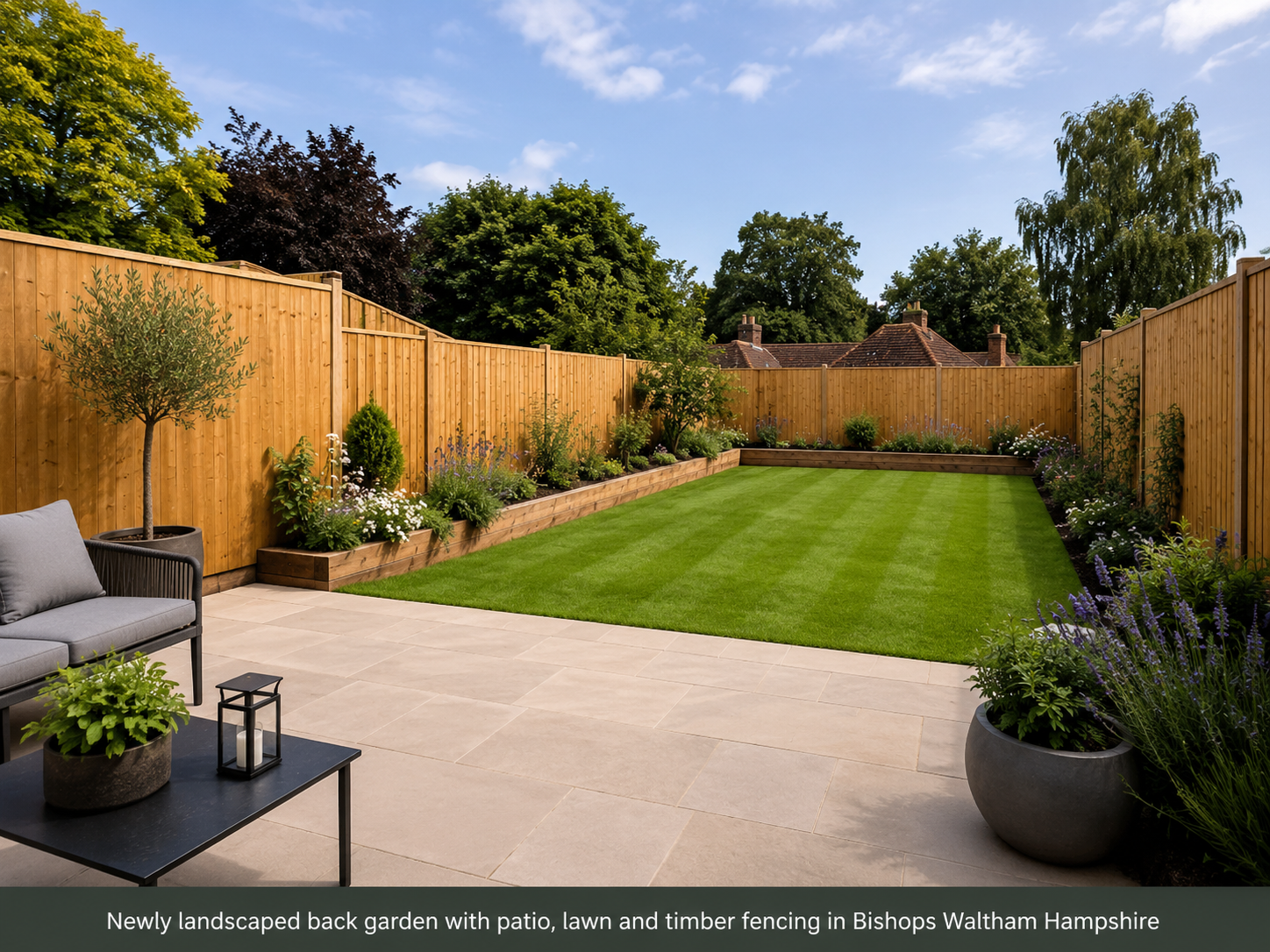
Newly landscaped back garden with patio, lawn and timber fencing in Bishops Waltham Hampshire
by Dave Carbonell • 8 June 2026
Planning a garden makeover near Bishops Waltham? Here's what to think about before you start, from layout and surfaces to fencing and planting.
A paved walkway stretches between two rows of neatly trimmed green hedges and manicured round trees.
by EH Landscaping & Tree Services • 13 April 2026
Get your garden ready for summer with these spring landscaping ideas in Bishops Waltham. Simple upgrades that make a real difference.
Group of conifer trees with blue sky background
by EH Landscaping & Tree Services • 6 March 2026
When is the best time to cut back conifers in the UK? Learn when to trim conifer hedges and how to keep them healthy in your garden.
white house with neatly trimmed hedges outside
5 December 2025
Unsure where to start with your garden? These seven signs show when professional help can restore your outdoor space. Perfect for Hampshire homeowners.